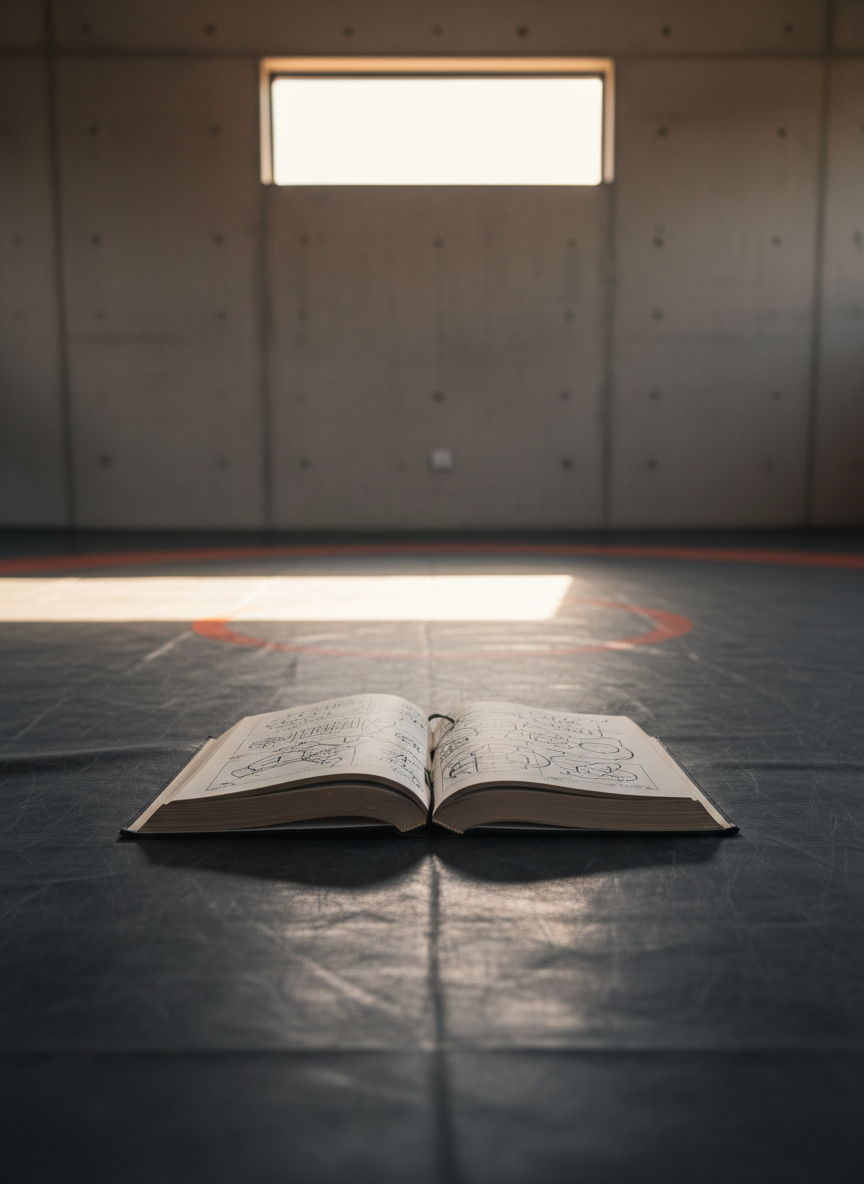
A heavy, well-worn leather wrestling mat in deep charcoal gray, its surface subtly creased and marked like a palimpsest of past conflicts, fills the foreground. In the center rests a single open hardcover book with cream pages, filled with dense philosophical diagrams and neatly annotated margins. The environment is a minimalist training hall with smooth concrete walls and a single high window. Late afternoon natural light slants in, creating a bright rectangle on the mat and long, contemplative shadows around the book. Photographic realism, shot at eye level with a shallow depth of field so the distant wall blurs into soft bokeh. The mood is disciplined and reflective, merging the worlds of combat training and abstract thought in a clean, professional aesthetic.

About KRASIS

Training minds and bodies to respond to conflict with clarity, courage, and creative restraint.

About

Where Philosophy Meets Combat Readiness

KRASIS began as late-night dojo debates about fear, conflict, and meaning. Today it is a rigorous practice that fuses ancient philosophy with grappling drills, training people to stay lucid, ethical, and effective under pressure and crisis.
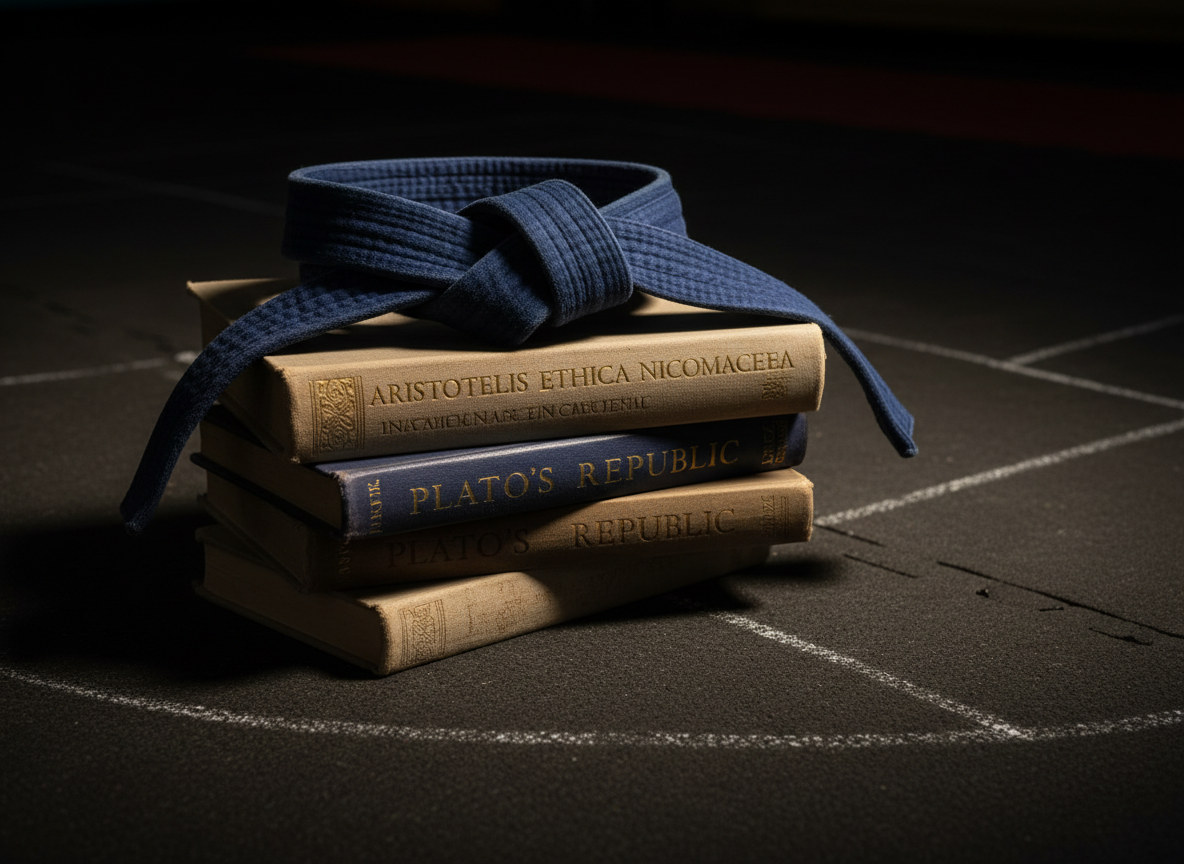
A close-up of a thick, navy-blue judo belt resting in a deliberate knot atop a stack of worn, cloth-bound philosophy texts with Greek and Latin titles embossed in gold. The stack sits on the edge of a dark, rubberized training mat, where faint chalk lines indicate practice zones. Warm, directional side lighting from a low desk lamp creates a chiaroscuro effect, accentuating the textures of frayed fabric and embossed lettering while the far side of the mat recedes into shadow. Photographic realism, shot from a low, slightly oblique angle with a shallow depth of field so only the belt and top books are crisp. The mood is serious and scholarly yet grounded in practice, conveying disciplined preparation for both intellectual debate and real-world self-defense decisions.

Sparring Partners

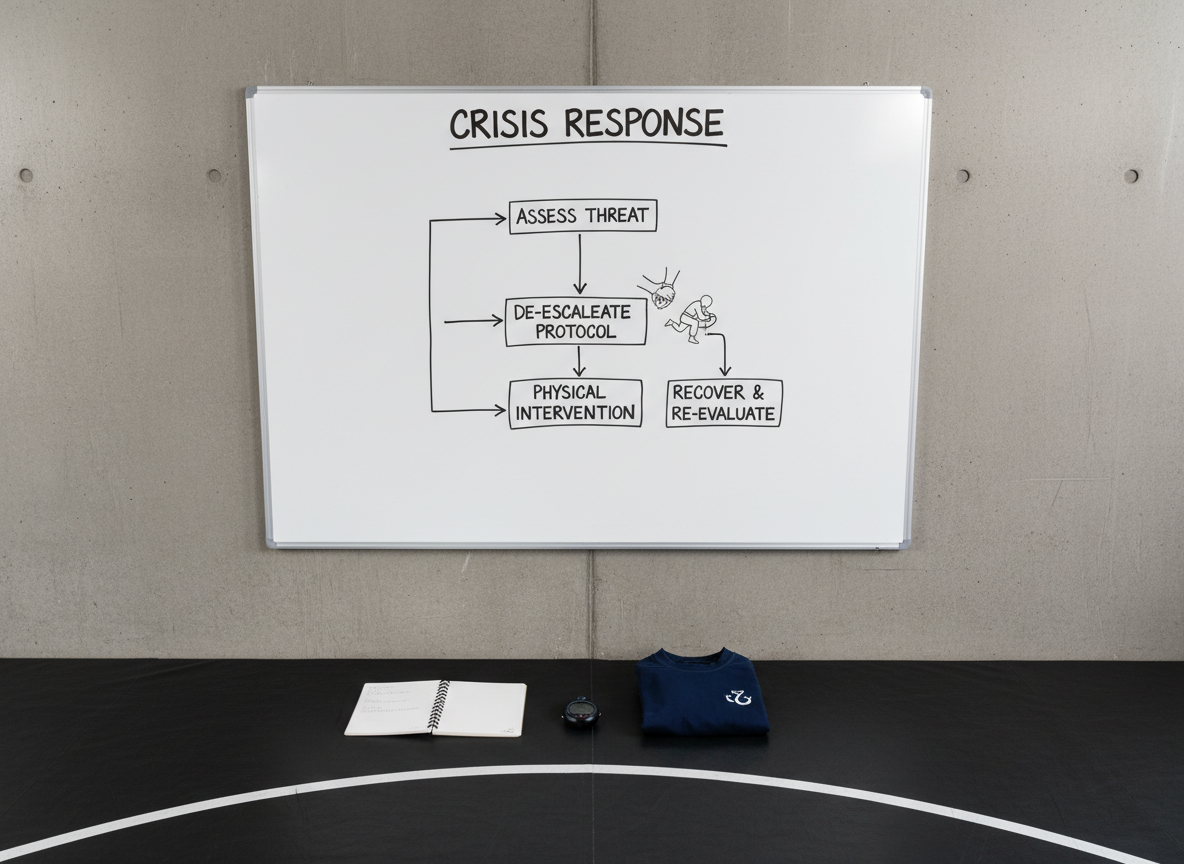
An overhead photographic shot of a large whiteboard mounted on a smooth concrete wall, covered with a carefully organized flowchart titled "Crisis Response" in crisp black marker. Arrows move between boxes labeled with logical steps, while small icons of wrestling grips and defensive stances are neatly sketched alongside key decision points. Below the whiteboard, on a dark wrestling mat, rests an open notebook, a black stopwatch, and a folded navy rash guard, all aligned with precision. Neutral, diffused studio lighting evenly illuminates the scene with no harsh shadows, emphasizing clarity and structure. The composition is clean and balanced, with ample negative space around the whiteboard edges. The atmosphere is methodical, professional, and focused on turning abstract theory into actionable, embodied strategy for high-pressure situations.

Aarav Sharma

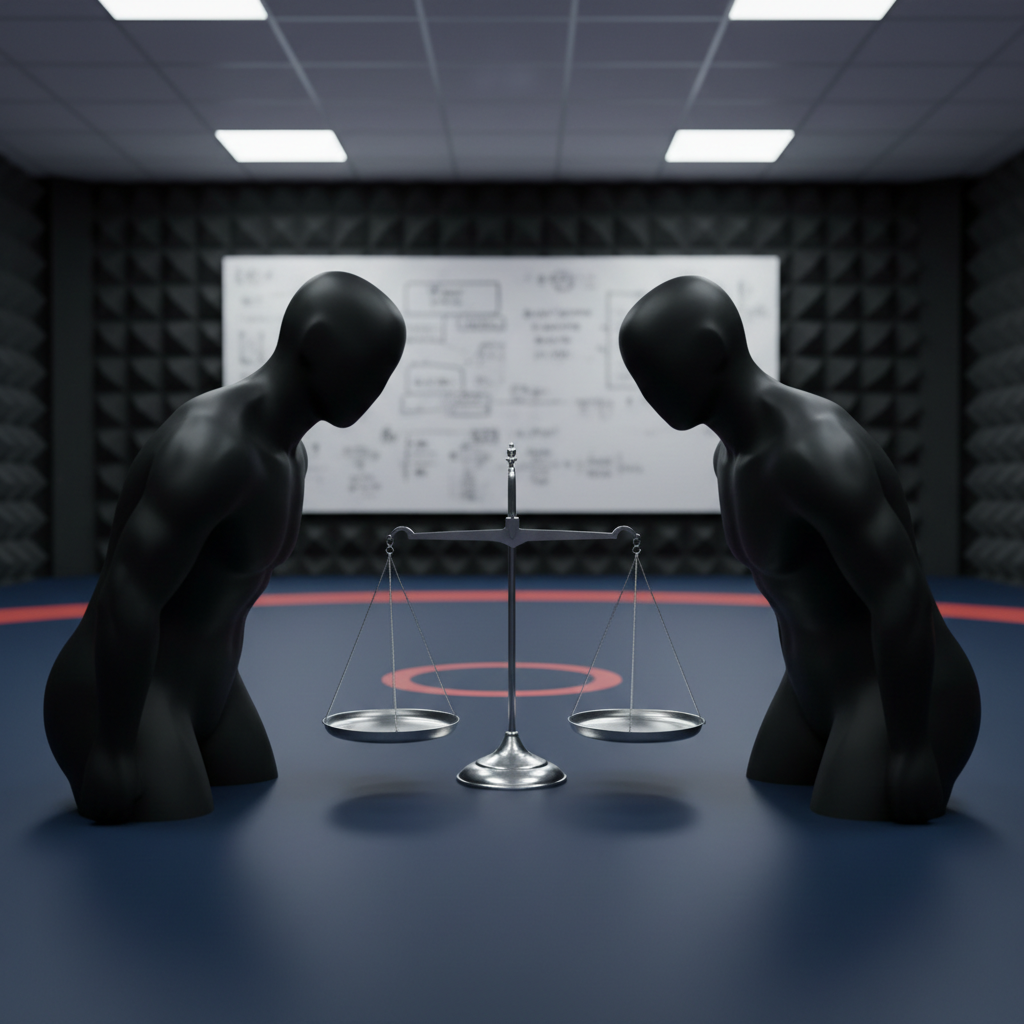
A pair of matte-black grappling dummies shaped as simplified torsos without faces or limbs stand opposite each other on a midnight-blue wrestling mat, frozen mid-clinch. Between them on the mat lies a polished metal scale, perfectly balanced, its reflective surface catching subtle highlights. The room is an austere studio lined with dark acoustic panels and a whiteboard covered in faint, blurred equations in the background. Cool, diffused overhead lighting casts precise, controlled shadows, emphasizing form and symmetry. Captured from a slightly elevated angle in photographic realism, with sharp focus throughout, the composition uses the rule of thirds to position the scale as a visual fulcrum. The atmosphere is analytical, professional, and quietly intense, symbolizing balance between physical leverage and intellectual strategy for crisis management.

Mateo García

A heavy, well-worn leather wrestling mat in deep charcoal gray, its surface subtly creased and marked like a palimpsest of past conflicts, fills the foreground. In the center rests a single open hardcover book with cream pages, filled with dense philosophical diagrams and neatly annotated margins. The environment is a minimalist training hall with smooth concrete walls and a single high window. Late afternoon natural light slants in, creating a bright rectangle on the mat and long, contemplative shadows around the book. Photographic realism, shot at eye level with a shallow depth of field so the distant wall blurs into soft bokeh. The mood is disciplined and reflective, merging the worlds of combat training and abstract thought in a clean, professional aesthetic.

Zuri Ndlovu

A close-up of a thick, navy-blue judo belt resting in a deliberate knot atop a stack of worn, cloth-bound philosophy texts with Greek and Latin titles embossed in gold. The stack sits on the edge of a dark, rubberized training mat, where faint chalk lines indicate practice zones. Warm, directional side lighting from a low desk lamp creates a chiaroscuro effect, accentuating the textures of frayed fabric and embossed lettering while the far side of the mat recedes into shadow. Photographic realism, shot from a low, slightly oblique angle with a shallow depth of field so only the belt and top books are crisp. The mood is serious and scholarly yet grounded in practice, conveying disciplined preparation for both intellectual debate and real-world self-defense decisions.

Leila Haddad

An overhead photographic shot of a large whiteboard mounted on a smooth concrete wall, covered with a carefully organized flowchart titled "Crisis Response" in crisp black marker. Arrows move between boxes labeled with logical steps, while small icons of wrestling grips and defensive stances are neatly sketched alongside key decision points. Below the whiteboard, on a dark wrestling mat, rests an open notebook, a black stopwatch, and a folded navy rash guard, all aligned with precision. Neutral, diffused studio lighting evenly illuminates the scene with no harsh shadows, emphasizing clarity and structure. The composition is clean and balanced, with ample negative space around the whiteboard edges. The atmosphere is methodical, professional, and focused on turning abstract theory into actionable, embodied strategy for high-pressure situations.
A pair of matte-black grappling dummies shaped as simplified torsos without faces or limbs stand opposite each other on a midnight-blue wrestling mat, frozen mid-clinch. Between them on the mat lies a polished metal scale, perfectly balanced, its reflective surface catching subtle highlights. The room is an austere studio lined with dark acoustic panels and a whiteboard covered in faint, blurred equations in the background. Cool, diffused overhead lighting casts precise, controlled shadows, emphasizing form and symmetry. Captured from a slightly elevated angle in photographic realism, with sharp focus throughout, the composition uses the rule of thirds to position the scale as a visual fulcrum. The atmosphere is analytical, professional, and quietly intense, symbolizing balance between physical leverage and intellectual strategy for crisis management.
A heavy, well-worn leather wrestling mat in deep charcoal gray, its surface subtly creased and marked like a palimpsest of past conflicts, fills the foreground. In the center rests a single open hardcover book with cream pages, filled with dense philosophical diagrams and neatly annotated margins. The environment is a minimalist training hall with smooth concrete walls and a single high window. Late afternoon natural light slants in, creating a bright rectangle on the mat and long, contemplative shadows around the book. Photographic realism, shot at eye level with a shallow depth of field so the distant wall blurs into soft bokeh. The mood is disciplined and reflective, merging the worlds of combat training and abstract thought in a clean, professional aesthetic.